
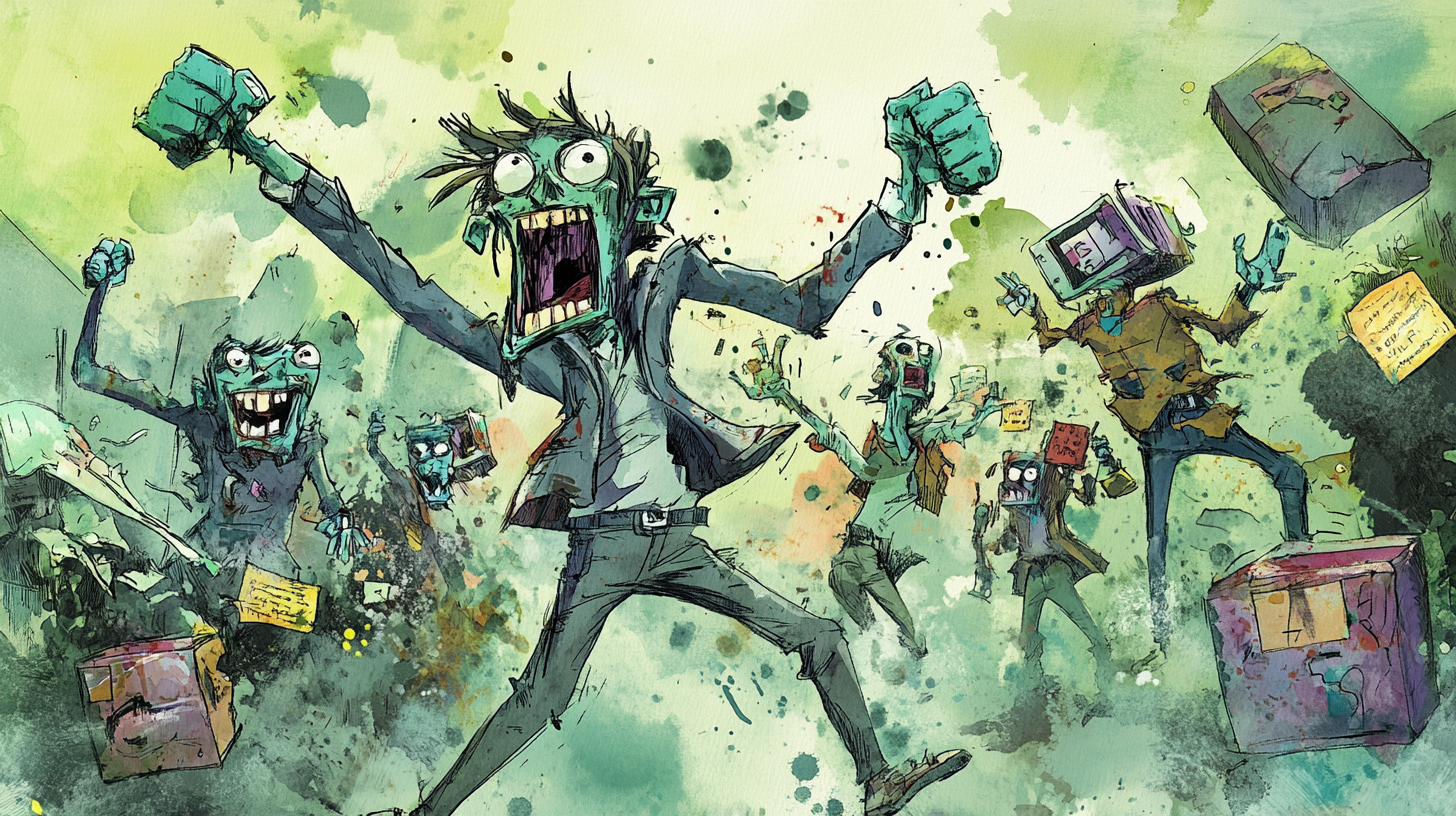
Fans eagerly awaited Project Zomboid’s Build 42 update. It promised new features to deepen their immersion in its gritty survival world. But what started as excitement soon spiraled into controversy. Sharp-eyed players found clues suggesting the game’s title and loading screen art may have been made with AI tools. This discovery sparked debates and anger within the community.
At the heart of the backlash lies a broader conversation about the role of AI in creative industries. For some, AI represents innovative potential; for others, it’s a looming threat to human artistry. Things got more complex when developer Chris Simpson clarified that a professional artist was commissioned for the work. This sparked discussions about ethics, transparency, and misunderstandings about AI integration.
This controversy is more than a blip on the radar. It’s a microcosm of the challenges gaming and creative industries face in navigating the rise of generative AI. This article will dissect the uproar’s origins. We’ll examine its broader implications. We’ll explore how it reflects the changing bond between human creativity and machine ingenuity.
Key Points

Controversy Origin
After Project Zomboid’s Build 42 update, excitement grew. Observant fans on Reddit and Steam forums noticed odd visual details. They had the hallmarks of generative AI tools:
- odd lighting
- strange distortions
- repetitive patterns common in machine-made art.
This sparked a wave of accusations aimed at The Indie Stone, the game’s developers, accusing them of cutting corners by opting for AI-generated content.
What began as speculation quickly escalated into a heated debate. Some in the community worried about possible ethical breaches. Accusations were paired with conspiracy theories that the developers were deliberately misleading their audience. For an update that had been so celebrated, the backlash was a significant and unexpected development.
Developer’s Response
Comment
byu/Diamond9542 from discussion
inprojectzomboid
Chris Simpson from The Indie Stone spoke to the community. He wanted to clear up the growing controversy. Simpson said a seasoned AAA concept artist created the artwork. He has collaborated with the team for years. Importantly, the team had no prior knowledge of any potential use of AI tools in crafting the imagery.

Simpson, aware of the sensitivity of AI in creative fields, expressed remorse. He pledged to act decisively. The artwork in question was removed as a precautionary measure while the team investigated further. In a heartfelt Reddit post, Simpson said, “If anyone is disappointed in us for failing to stop AI artwork from getting into the game, that’s fair. I apologize.””
This proactive approach shows a commitment to transparency and trust with fans. It emphasizes the human side of game development, which is often missed during public controversies.
Community Reaction

Surprisingly, the community’s response was more nuanced than the initial outcry may have suggested. A vocal minority criticized the possibility of AI in Build 42. But, the majority backed the developers. Fans praised the update’s ambitious features. Many said the controversy overshadowed the innovative gameplay improvements.
One Reddit user, summarizing the prevailing sentiment, commented, “[It’s a] vocal minority complaining, most of us are just so happy for the update and proud of the work you’ve done. Keep it up.” Meanwhile, a few more playful community members pushed back against the heightened scrutiny by annotating older in-game artwork with sarcastic “AI detection” labels, poking fun at the controversy.
However, it’s important to note that the mere suspicion of AI involvement prompted some to question the broader integrity of commissioned gaming assets. This reaction underscores the fragile relationship between game studios, their communities, and the increasing complexity of AI integration in creative workflows.
Broader Implications
Misconceptions and Concerns About AI in Art
The uproar surrounding Project Zomboid’s artwork reflects a broader misunderstanding about generative AI’s role in the creative process. Contrary to popular belief, AI-generated art isn’t always as simple as “typing a prompt” into a machine. Many artists blend manual skill, conceptual ideation, and software tools to produce hybrid works. Yet, the ambiguity of truthful attribution presents a notable issue: when does collaboration with AI cease being “human-made”?
Though misunderstandings abound, the critiques leveled at AI art stem from deeply valid concerns. Chief among them is the contentious use of datasets in training AI models—many of which are populated with works scraped from creators without consent. Additionally, artists fear job insecurity as companies increasingly adopt AI to streamline production cycles. Finally, while AI can accelerate workflows, its outputs are often marred by quality inconsistencies that create further hurdles in creative fields.
In gaming, this incident shows growing pains. As art forms that need hands-on skill adapt to automated tools, they face issues. It’s a learning moment for developers and players alike—one that demands ongoing dialogue about how to ethically and effectively blend AI innovation with human creativity.
Ethical Considerations
Risks of AI-Generated Content and Necessary Reforms
The controversy forces the industry to reckon with a key ethical dilemma: the potential devaluation of human artistry. As AI-generated content becomes more prevalent, the intrinsic value of human effort and originality is diluted, which can demoralize artists and lead to diminishing financial opportunities across the creative sector.
Advancing AI responsibly will require comprehensive reforms, particularly around the curation and usage of datasets. At present, scraping online content without explicit permission remains a widespread practice that undermines intellectual property rights. Advocates argue that transparency in training data, coupled with licensing agreements compensating creators, could pave the way for fairer AI usage.
Beyond ethics, these discussions must also extend to accountability. Could developers or third-party providers ultimately bear legal and reputational responsibility for unregulated AI integration? Taken together, these conversations will play a crucial role in shaping the future interplay between machine efficiency and human creativity.
Statistics and Community Sentiment
Despite this controversy, Project Zomboid remains a cultural cornerstone in the survival gaming genre.
The Build 42 update helped the game achieve a concurrent player count of more than 39,000—a number that outshines comparable titles like Dead By Daylight or The Forest. Such figures highlight the community’s deep engagement with and loyalty toward the franchise.
When polled, a majority of players indicated continued support for the developers despite recognizing the controversy, signaling that transparency efforts were effective in easing tensions. This situation serves as a crucial testament to the importance of open communication when facing challenges over new technologies like AI.
The Project Zomboid incident encapsulates much larger trends in the intersection of technology and artistry. By examining this case, we not only explore technological hurdles but also begin envisioning the ethical guidelines necessary for a sustainable creative ecosystem. As the dust settles, this controversy holds lessons. They could guide developers balancing innovation and integrity. In the aftermath of Project Zomboid’s controversy, one truth crystallizes: we are still learning to navigate the fine line where human creativity and machine intelligence converge. The Build 42 update, though debated, shows the pains of tech evolution. Here lies a clarion call for transparency—developers, artists, and AI practitioners must align on ethical frameworks to ensure that innovation serves, rather than replaces, human artistry.
For The Indie Stone, this fracas was both a challenge and an opportunity. It was a chance to reaffirm their values to an adoring community. For gaming and creative industries writ large, it reinforces the need for thoughtful collaboration between human and machine. As we move forward, perhaps the question isn’t if machines will create art. It’s how we, as custodians of creativity, will guide their ingenuity to amplify our humanity.
And therein lies the irony: AI, in its mechanical precision, has stirred the very human passions of debate, creativity, and ethical reflection. That, perhaps, is the artform AI didn’t realize it was creating all along.
Leave a Reply