
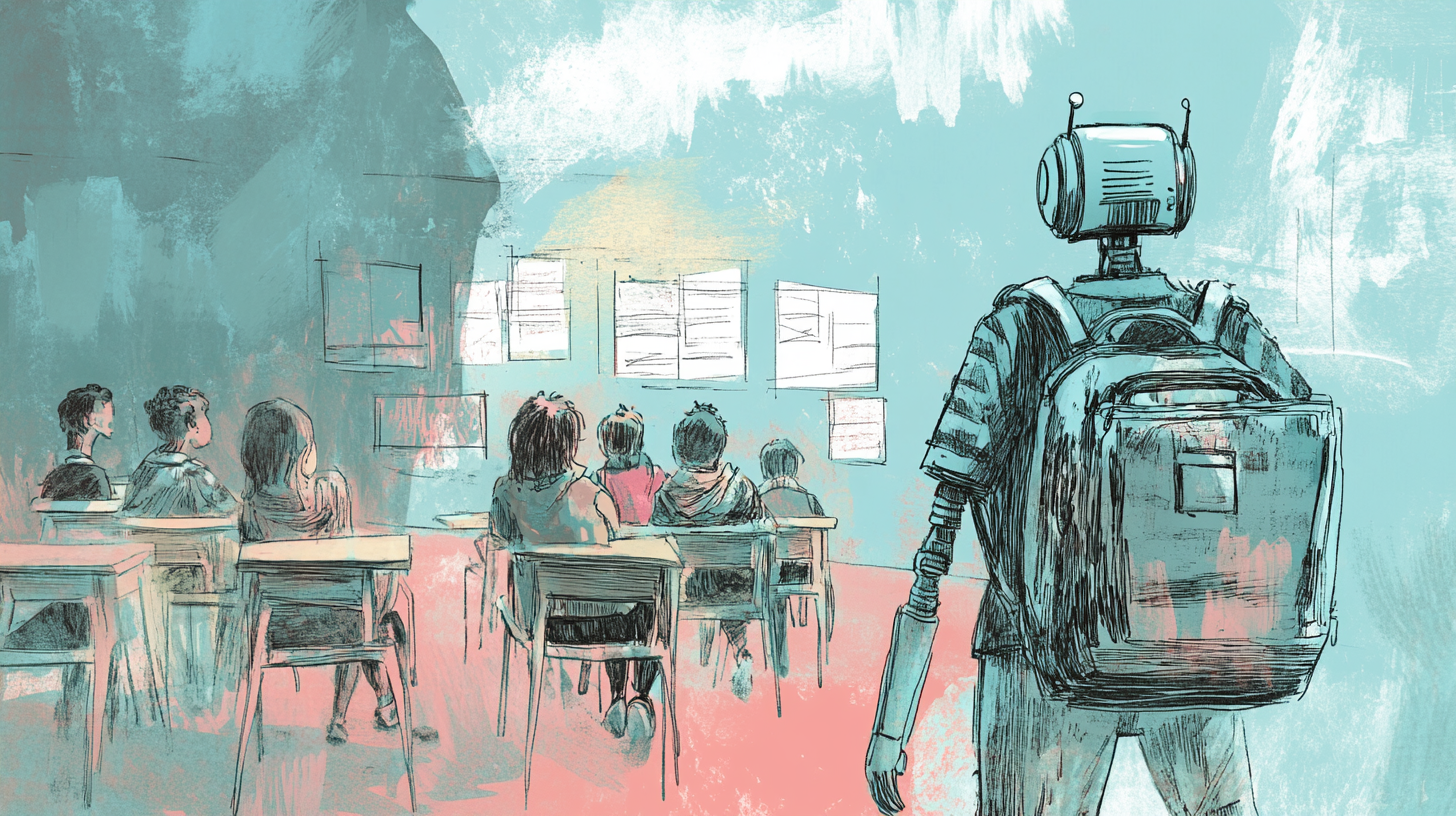
Imagine a classroom where AI tools are as common as textbooks. Students talk to AI companions and learn from smart tutors. This future is fast becoming our reality. It brings exciting possibilities but also raises concerns for children’s emotional well-being. As schools adopt AI, educators and parents face a challenge: how to use AI’s benefits while safeguarding students’ social and emotional growth.

Recent studies show that about 25% of U.S. families lack reliable internet access. This highlights the challenges of using technology in education. The Happy Sad app is one example of how AI can help student well-being when used right. Mathilde Cerioli, Chief Scientist at everyone.AI, says, “All language shapes our understanding of this world.” This emphasizes the need for careful introduction of AI tools in schools. In this article, we will explore strategies for engaging students with AI while protecting their emotional health and ensuring fair access to these tools.
The Dual Nature of AI in Education

Balancing Benefits and Risks

AI in education offers both opportunities and challenges for student well-being. The Happy Sad app helps students understand and express their feelings through gamified experiences. However, Pilyoung Kim, Director of the Family and Child Neuroscience Laboratory, warns about the risks of over-reliance on AI, especially for vulnerable youth.
Creating Safe Digital Learning Environments
Schools must redefine safety when integrating AI. This includes:
- Guided Exploration: Supervise students as they interact with AI tools, like teaching swimming with proper oversight.
- Clear Boundaries: Set clear expectations about what AI can and cannot do.
- Cultural Sensitivity: Ensure AI tools respect diverse cultural contexts.
As Mathilde Cerioli says, “All language shapes our understanding of this world.” It’s vital to frame AI interactions appropriately for different ages and cultures.

Addressing Infrastructure and Access
The digital divide is a major issue, with about 25% of U.S. families lacking reliable internet. To ensure fair AI integration:
- Develop offline-capable AI tools.
- Create resource-sharing programs.
- Use hybrid learning approaches that include those without home internet access.

Regulatory Framework and Safety Measures
The EU AI Act takes effect in February 2025, providing guidelines for responsible AI use in education. Key points include:
- Banning manipulative AI practices.
- Ensuring transparency in AI decisions.
- Promoting AI literacy among educators and students.

Practical Implementation Strategies
To successfully integrate AI while protecting student well-being:
- Regular Assessment: Monitor student-AI interactions for signs of over-reliance.
- Balanced Approach: Combine AI tools with traditional human interaction.
- Transparent Communication: Clearly explain AI’s role and limitations.
- Cultural Adaptation: Ensure AI tools reflect diverse perspectives.
Kristi Boyd reminds us, “Your toothbrush probably doesn’t need AI.” This prompts us to be selective and purposeful in using AI technology.
Building Digital Resilience

AI in Social-Emotional Learning shows promise in supporting mental health through:
- Early stress detection.
- Personalized interventions.
- Emotional awareness development.
- Alerts for support systems.
The key is to maintain human oversight while using AI to enhance traditional support.
Conclusion
Integrating AI in education is like tending a garden. It needs both tools and care. This approach blends technology with emotional support. AI can boost student engagement and awareness but human connections and equity are vital too.
The way forward requires careful planning. We must weigh the benefits and challenges of AI in schools. Success depends not only on technology but also on supportive frameworks for accessibility, cultural sensitivity, and emotional health. The EU AI Act sets new standards. Tools like the Happy Sad app show how responsible AI can improve human connections in education.
The future of education is about balance. We must leverage AI while valuing human interaction and emotional growth. Educators, parents, and stakeholders should advocate for fair access to AI tools. These tools should enhance learning, not hinder emotional development. By focusing on student well-being, we can create an environment where technology enriches the learning experience.
Leave a Reply