
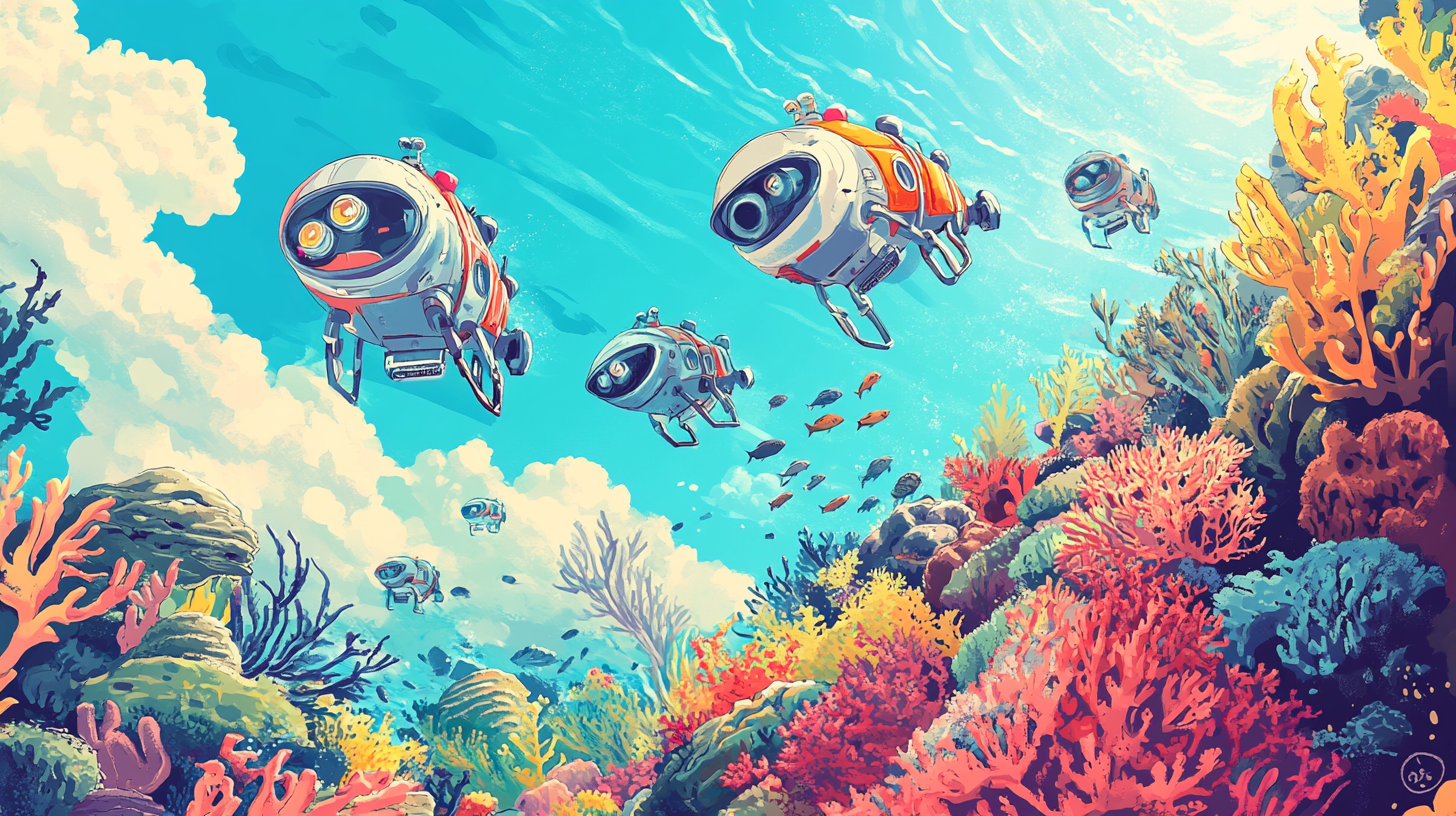
While coral reefs occupy just 1% of our oceans, they support a quarter of all marine life.
Yet today, the Great Barrier Reef – our planet’s largest living structure – faces an unprecedented crisis. Rising ocean temperatures have triggered widespread bleaching events, threatening this vital ecosystem’s survival. But in an unexpected twist, artificial intelligence might hold the key to its preservation.

Researchers and technologists are developing groundbreaking solutions that combine AI, machine learning, and remote sensing to monitor and protect this natural wonder. “This breakthrough model can effectively help us engage hundreds of thousands of people in the Great Reef Census and conservation,” says Andy Ridley, CEO of Citizens of the Great Barrier Reef. From analyzing underwater imagery to predicting bleaching events before they occur, these digital tools are transforming how we fight for our coral reefs’ future.
As we stand at the intersection of environmental crisis and technological innovation, one question emerges: Can artificial intelligence help save one of Earth’s most precious ecosystems?
The Escalating Crisis of Coral Reef Decline

The Great Barrier Reef stands as a stark reminder of climate change’s impact on marine ecosystems. Since 2016, multiple severe bleaching events have devastated this underwater wonder, threatening not just its beauty but its very survival. Despite occupying merely 1% of ocean space, coral reefs support an astounding 25% of all marine life, making their preservation crucial for global biodiversity.

Technology’s Role in Reef Conservation
Advanced Monitoring Systems

Modern conservation efforts have evolved beyond traditional observation methods. Today’s reef monitoring combines several cutting-edge technologies:
- Remote sensing satellites tracking temperature changes
- AI-powered image analysis of underwater footage
- Machine learning models predicting bleaching events
- Geographic Information Systems (GIS) mapping reef changes
These tools work together like a digital guardian for the reef, providing unprecedented insight into its health and challenges.
The Power of AI Innovation

Dell Technologies’ breakthrough initiative demonstrates AI’s transformative potential in conservation. Their deep learning models analyze thousands of reef images in minutes, a task that would take human researchers months to complete. As Andy Ridley, CEO of Citizens of the Great Barrier Reef, explains: “This breakthrough model can effectively help us engage hundreds of thousands of people in the Great Reef Census and conservation of the Great Barrier Reef.”
Collaborative Conservation Efforts
A United Front Against Reef Decline
The fight to save the Great Barrier Reef has united multiple organizations:
- Australian Institute of Marine Science (AIMS)
- CSIRO
- James Cook University
- University of Queensland
- Citizens of the Great Barrier Reef

Each organization contributes unique expertise and resources to create a comprehensive conservation approach. This collaboration has established what Dr. Abdullahi Chowdhury describes as “a single centralized model” that integrates various factors affecting coral reefs and provides real-time predictions.
Future-Forward Solutions
The integration of AI with conservation efforts represents more than just technological advancement—it’s a fundamental shift in how we protect marine ecosystems. These digital tools serve as an environmental early warning system, enabling conservationists to:
- Predict potential bleaching events before they occur
- Identify areas requiring immediate intervention
- Track recovery patterns in damaged reef sections
- Coordinate response efforts more effectively
Real-time AI monitoring systems are now being deployed across the reef, creating a digital safety net that helps protect this irreplaceable ecosystem. This technology isn’t just preserving the Great Barrier Reef—it’s creating a blueprint for coral reef conservation worldwide.
Conclusion
The integration of artificial intelligence into coral reef conservation represents more than just technological advancement—it’s a paradigm shift in how we protect our planet’s most precious marine ecosystems. Like a vigilant digital guardian, AI now stands watch over the Great Barrier Reef, processing vast amounts of data to detect threats before they become catastrophic.
The collaboration between leading research institutions, technology companies, and conservation organizations demonstrates that protecting our natural wonders requires a unified approach. While coral reefs occupy just 1% of our oceans, their support of 25% of marine life makes their preservation crucial for global biodiversity. Through AI-powered monitoring systems, predictive modeling, and real-time analysis, we’re not just observing these ecosystems—we’re actively participating in their survival.
As these technologies continue to evolve and expand to other reef systems worldwide, they create a blueprint for environmental conservation in the digital age. The marriage of human ingenuity with artificial intelligence offers hope that the Great Barrier Reef will continue to thrive for generations to come, serving as a testament to what we can achieve when we combine technological innovation with environmental stewardship.
Leave a Reply