

Picture a classroom where each student enjoys learning tailored just for them. Teachers can ignite curiosity, spending less time on paperwork and more on passion. This isn’t a far-off fantasy; it’s our reality, thanks to the magic of artificial intelligence in education. Recent studies reveal that a stunning 97% of higher education students embrace AI tools, while 60% of principals leverage AI for administrative ease. As RAND researcher Julia Kaufman wisely notes, “AI is becoming a real tool for people.” Yet, pivotal questions linger about the best ways to harness this power to boost efficiency and learning.
From customized learning experiences to automated administrative chores, AI is reshaping education. But tidal waves of change can pose challenges, especially in ensuring equal access for every school. As we delve into this educational transformation, one truth stands bold: mastering AI in education is no longer optional—it’s rapidly becoming essential.

The Current State of AI in Education

Transforming Teaching and Learning

AI is revolutionizing classroom instruction through personalized learning pathways and automated assessment tools. According to recent studies, 97% of higher education students are already utilizing AI-powered tools to enhance their learning experience. These tools range from intelligent tutoring systems that adapt to individual learning speeds to automated grading systems that provide instant feedback.
Administrative Efficiency and Support

In education, AI is becoming a useful partner for administrators. About 60% of school principals use AI to draft messages and handle tasks. This saves time for educational leadership. AI tools streamline resource allocation and track student attendance. They make school operations more efficient than ever.Challenges and Considerations
The Equity Gap

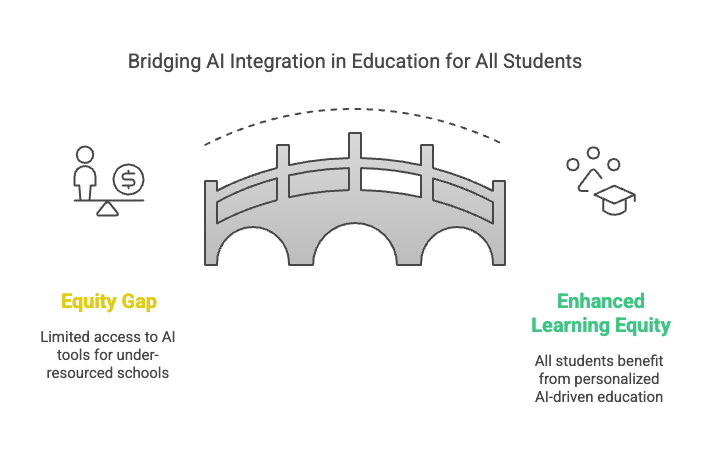
One of the most pressing concerns in AI education implementation is the equity gap. Research shows that teachers and principals in higher-poverty schools are significantly less likely to have access to AI tools or receive proper training. As noted in the NEA Task Force Report, only 18% of principals receive guidance on AI usage, with this number dropping to 13% in high-poverty schools.
Professional Development Needs
The successful integration of AI in education requires comprehensive training and support. As RAND Corporation researcher Julia Kaufman points out, “AI is becoming a real use for people, but we need to carefully consider its usefulness for both improving efficiency and enhancing teaching and learning.”This shows the urgent need for structured training programs. These programs help teachers use AI tools effectively.
Looking Ahead: Future Integration

Building AI Literacy

As we move toward 2025, AI literacy is becoming increasingly crucial for both educators and students. Schools are beginning to incorporate AI education into their curriculum, preparing students for a future where AI literacy will be as fundamental as digital literacy is today. The Campus Technology report suggests that AI literacy will be one of the top three areas impacting higher education by 2025.
Ethical Considerations and Safety

The integration of AI in education must be balanced with strong ethical guidelines and safety measures. Schools and districts are working to develop comprehensive policies that address concerns about data privacy, algorithmic bias, and appropriate use of AI tools. This includes establishing clear guidelines for AI use in assignments, as evidenced by the fact that 89% of students already use tools like ChatGPT for homework.
Recommendations for Implementation

To ensure successful AI integration in education, schools should:
- Develop comprehensive AI training programs for educators
- Establish clear policies for ethical AI use
- Ensure equitable access to AI tools across all schools
- Regular evaluation of AI tools’ effectiveness
- Create support systems for ongoing professional development
The path forward requires careful consideration of both the opportunities and challenges that AI presents in education. By addressing these aspects thoughtfully, schools can harness AI’s potential while ensuring equitable and ethical implementation across all educational settings.
Conclusion

As we meet at the crossroads of education and artificial intelligence, AI stands out as a strong support for teachers and students. The statistics are striking—97% of college students use AI tools. Still, numbers only tell part of the story. AI’s true promise in education goes beyond automating tasks. It can create equitable, personalized, and effective learning experiences for all.
Yet, like any powerful tool, AI’s success in education relies on careful use. There is a gap in AI access and training between well-resourced and under-resourced schools. This gap shows the need for strong policies and professional development programs. As AI literacy becomes as vital as digital literacy, ensuring equal access to tools and training is an educational priority and a moral duty.
The future of education isn’t about choosing between human teachers and AI. It’s about forming a strong partnership that serves every student. By tackling implementation challenges, setting clear ethical guidelines, and investing in training, we can make AI a tool for educational equity, not another obstacle. The real question is not if AI will change education, but how we will guide that change for all learners.
Leave a Reply